
Welcome to The Student Success Stack!
Navigating the worlds of higher education, policymaking, technology, and student success!

Welcome to The Student Success Stack.
I’m Jordan Stein, Head of Public Affairs and Communications at EdSights, and I’m excited to share the debut edition of this new monthly newsletter designed to convene a community of leaders, advocates, and innovators committed to supporting students at colleges and universities of all shapes, sizes, and types across America.
Higher education is evolving at lightning speed. Cultural, economic, political, social, and technological flashpoints are creating enormous challenges for institutions to navigate — and those challenges, along with many we cannot yet foresee, will continue shaping the sector in the months and years ahead.
Yet amid all of this change, one thing must remain at the center of the conversation: the students we seek to serve and support.
Across higher education, government, philanthropy, and the private sector, thousands of people are searching for better ideas, stronger dialogue, and more effective strategies to help students persist, succeed, and thrive. At its best, higher education remains one of the most powerful engines of opportunity, mobility, and personal growth in American life.
This newsletter is for the student affairs professionals, academic leaders, college and university presidents, state legislators, education commissioners, system leaders, trustees, foundation partners, scrappy innovators, and others working to cut through the noise and focus on what matters most: student success.
Each month, I’ll share a roundup of can’t-miss news stories, policy developments, and analysis from the intersection of higher education, public policy, technology, and student support — along with interviews and conversations with leaders and thinkers helping shape the future of the sector.
We will also have some pop-up virtual events for our community.
I welcome your thoughts, feedback, and suggestions along the way. Read a story that made you think — or made you want to smash your forehead into a wall? Know a policymaker, campus leader, or innovator whose perspective should be featured here? Send me a note at jordan@edsights.io.
Now … let’s dive in.
Analysis, Columns, And News That Got Me Thinking …
AP: “Graduates are booing pep talks on AI at college commencements”
Commencement season put a spotlight on growing student anxiety around AI and the employment landscape. At a number of institutions’ commencement ceremonies, graduates booed speakers promoting AI technologies, an indication of fear about career displacement and economic uncertainty.
A thought: As we think about AI technology in and around campuses, this community may benefit from moving away from tech jargon and leaning into how technology - in many cases - can be leveraged to elevate how students are supported. Institutions can also play a pivotal role in ensuring students feel prepared to succeed in our evolving economy.
The New Yorker: “The Enrollment Cliff Is Here. Which Schools Will Survive It?”
The long-forecasted demographic decline in college-age students is now materially reshaping institutional strategy. This long-form column dives into how regional public institutions and smaller colleges are confronting enrollment declines, mergers, financial challenges, and growing skepticism about the value of higher education.
A thought: Any discussion of the enrollment cliff must acknowledge the fact that student success, retention, and persistence are increasingly existential institutional priorities – not just student affairs goals.
Inside Higher Ed: “Mental Health Support is Becoming an Institutional Infrastructure Question”
This story highlights growing efforts to simplify and centralize campus mental health systems, suggesting that many students struggle to navigate fragmented support structures. At the same time, new national survey data shows colleges expanding counseling and wellness programs, including support for students returning from mental health leave.
A thought: Student well being is directly connected to persistence and belonging. More and more institutions are treating this as a mission-critical priority.
MultiState: “How States Are Regulating AI In Education This Legislative Session”
State legislatures have introduced more than 130 AI-in-education bills this legislative cycle, with increasing focus on student data privacy, AI governance, and restrictions on how student data can be used to train models.
A thought: The legislative and regulatory climate around AI in education (public and private) is rapidly evolving. It is important to distinguish between proposals and actually enacted legislation, along with implementation periods. More to come!
Economic Times: “Why AI-Ready campuses are becoming the new admissions advantage for universities”
We are beginning to see institutions market themselves as “AI-ready” – literacy, curriculum integration, tech infrastructure, and more.
A thought: It will be interesting to see the response to this sort of positioning, particularly in light of affordability, career readiness, and student support concerns that we see day in and day out.
Inside Higher Ed: “SUNY Sets Systemwide AI Policy”
SUNY has adopted one of the country’s most expansive systemwide AI governance frameworks, establishing policies across its 64 campuses that encourage the use of AI in advising, tutoring, and student support, while adding guardrails around bias, data privacy, and more.
A thought: We are increasingly seeing campuses and systems move from a debate over AI’s integration into operations, into a posture of how to leverage it and responsibly use it at scale, particularly in student-facing contexts.
The Atlantic: “College Should Be Way More Fun”
Amherst President argues that college experiences have become overly focused on job preparation, ideological conflict, and measurable outcomes, at the expense of intellectual curiosity, playfulness, and the joy of learning. He argues that in an AI-driven world increasingly defined by instant answers and certainty, higher ed’s real value may lie in teaching students how to wrestle with ambiguity, think collaboratively, and engage in the process of inquiry.
A thought: This is a somewhat different take than leaders who have argued for marketing campuses as “AI-prep grounds.” This will be an interesting discussion to monitor in the weeks and months to come.
New York Times: “With Just One Word, Brandeis Is Trying To Change College Shopping”
Brandeis University has launched an AI-powered tool to tell prospective students what they are likely to actually pay to attend – including merit aid and financial aid – before they apply.
A thought: For obvious reasons, affordability is top of mind for all students and families. This is an interesting take on leveraging AI to disrupt the hyper-competitive admissions, recruitment, and persistence questions facing institutions.
“Open Office Hours”
In this segment, I will bring you an exclusive interview with a policymaker with a demonstrated interest in higher education policy and working in partnership with campuses and administrators to support students.
To kick us off, it is a privilege to bring you a conversation with Alabama State Representative Jeremy Gray.
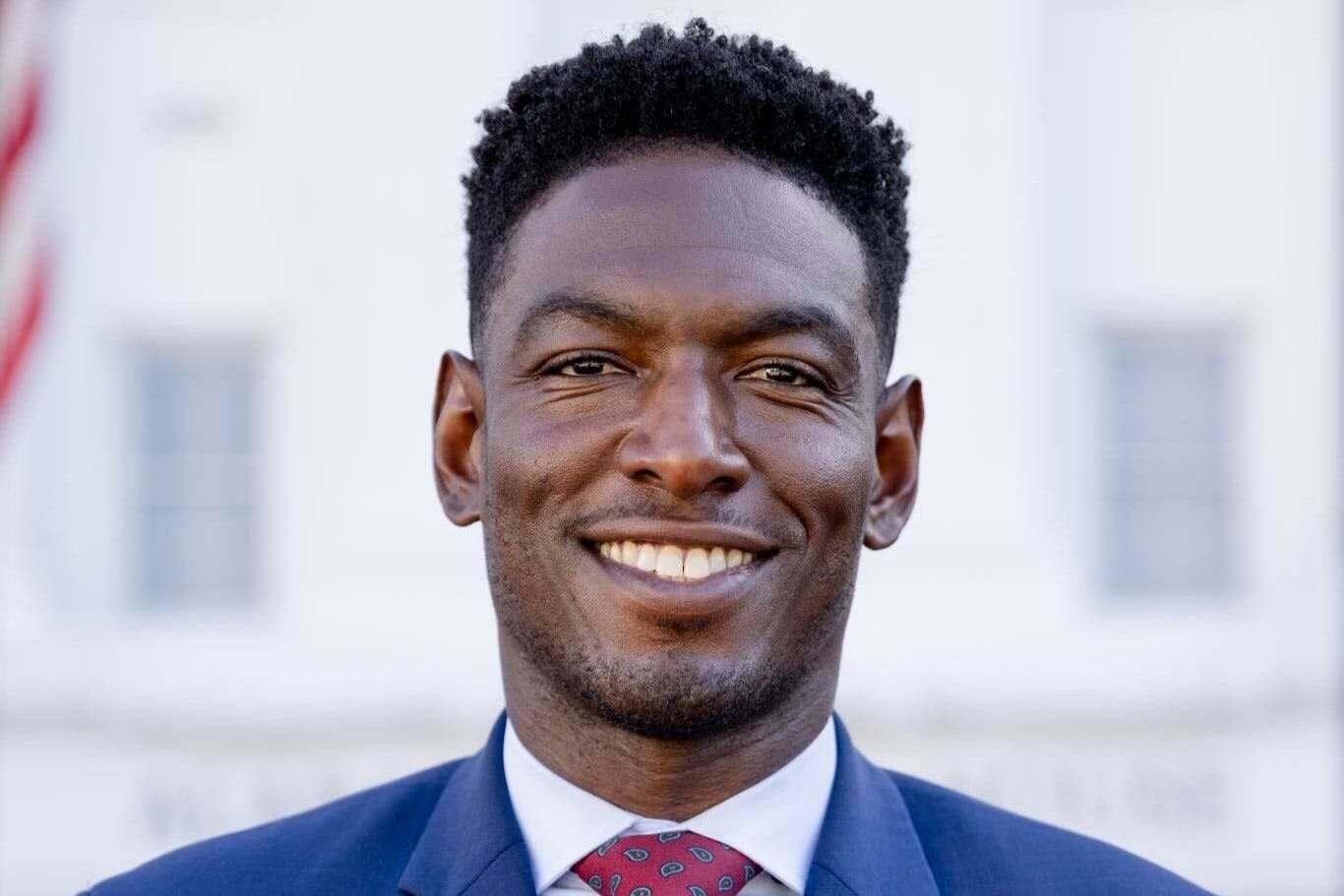
SST: As an elected representative, how do you view your role as it relates to supporting college or university students who may live or attend school in your community?
Rep. Gray: As an elected representative, I see my role as helping create an environment where students can not only access higher education, but also thrive while pursuing it. That means advocating for policies that strengthen affordability, workforce development, mental health access, and economic opportunity. In communities like mine, where higher education institutions serve as anchors for growth and innovation, supporting students also means ensuring they feel connected to the broader community and prepared for life beyond graduation.
SST: What challenges do you believe young people working through college or university degree programs face today?
Rep. Gray: Students today are balancing more than academics. Many are navigating financial pressure, housing insecurity, mental health challenges, family responsibilities, and uncertainty about what comes next after graduation. There is also the challenge of staying engaged in a fast-moving digital world where access to information is constant, but meaningful connection can sometimes feel limited. We have to recognize that student success is not just about getting into college—it’s about having the support systems to persist and finish.
SST: What gives you optimism about the future as it relates to students currently pursuing higher education?
Rep. Gray: What gives me optimism is the resilience, creativity, and adaptability of this generation. Students today are highly aware of the world around them, more entrepreneurial, and deeply interested in creating impact. I’ve seen young people who are not just preparing for jobs, but thinking critically about leadership, innovation, service, and solving real problems in their communities. If we invest in them well, they will absolutely shape a stronger future.
SST: How can state government leaders and colleges and universities work together to best support students?
Rep. Gray: The best outcomes happen when higher education and government work in partnership rather than in silos. That includes aligning education pathways with workforce needs, strengthening internship and apprenticeship opportunities, improving mental health resources, addressing affordability, and using data to identify where students may be struggling before they fall behind. We also need to listen directly to students because the people closest to the challenge often have the clearest solutions.
SST: Anything else you would like to share about your thoughts relating to students, technology’s role in supporting them, or otherwise as it relates to higher education?
Rep. Gray: Technology can be a powerful tool when used intentionally. It can help institutions better understand student needs, improve communication, and identify at-risk students earlier. But technology should enhance human connection—not replace it. At the center of higher education will always be relationships, mentorship, opportunity, and belonging. If we can combine innovation with intentional support, we can create systems that help students succeed academically, personally, and professionally.
“EdSights Insights”
EdSights partners with hundreds of colleges and universities across America to deliver products and solutions to create a more student-centered higher education experience. My colleagues and I spend our days engaging with leaders across all layers of the student support ecosystem. Each month, I will bring you a short conversation with an EdSights leader to share a candid perspective on how we view the role of technology and innovation in being part of the student success solution.
To kick us off, I spoke with EdSights Co-Founder and Co-CEO Carolina Recchi

SST: You are constantly in touch with hundreds of college and university leaders, including presidents, provosts, student affairs leaders, and frontline advisors. What are the one or two most consistent challenges you are hearing about in terms of their capacity to meet today’s moment and support their students?
Caro: One of the biggest things we hear over and over is that institutions often find out about student issues too late. In many cases, they actually do have caring staff, support systems, and resources in place — but by the time a student raises their hand, they’re already disengaged or at risk of stopping out. That’s really the barrier we’ve spent the last eight years trying to solve at EdSights: helping schools hear from students earlier and more consistently.
At the same time, student needs are becoming more complex while institutional resources are shrinking. Colleges are being asked to do more with less every year. So a huge question right now is: how do you scale meaningful human support without burning out your staff? That’s where technology can play a really important role.
SST: One of the premises EdSights is built on is that cutting edge technology can be leveraged to improve the student experience on all sorts of campuses – public, private, large, small, online, in-person, and everything in between. What is a current “hot take” on your mind in terms of how technology will enable campuses to best capture the student voice and use it to improve student success?
Caro: A lot of people assume AI will reduce human connection in higher education, but I think the opposite is happening. At EdSights, we use AI to proactively check in with every single student at scale - because realistically, staff teams can’t personally reach out to thousands of students every week to identify barriers and provide support. The technology helps surface who needs support, what they’re struggling with, and when intervention matters most.
What that does is shift human interactions away from transactional things like routine check in calls and toward the moments that actually require empathy, trust, and judgment. The human is no longer being pulled into every routine interaction like registration or transactional questions - they’re being brought into the highest-stakes moments. So as AI gets better at listening and outreach, it’s actually raising the bar on being human.
SST: What fills you with optimism as you think about the higher education landscape in the years to come?
Caro: I think we’re starting to see a real generational shift in higher ed leadership - I see this from the partners we work with today and from the people stepping into leadership roles now. There’s more openness to experimentation, more urgency around student outcomes, and more willingness to rethink old models that clearly aren’t working for today’s students. The institutions that embrace that mindset are going to create dramatically better student experiences over the next decade.